Free educational resource - Plain-English guides on trademark law
Questions? Get in touch ->
What you'll learn

Four pillars of trademark fluency

Every course and guide is mapped to one of these competencies, so you always know exactly what you're building.

1.

Foundations

What a trademark really is, what it protects, and how it differs from copyright, patents, and trade secrets.

2.

Clearance

Run searches, read examiner reports, and avoid the conflicts that doom 65% of first-time filings.

3.

Filing

USPTO TEAS, Madrid Protocol, EUIPO - file confidently in the right office for the right rights.

4.

Enforcement

Cease & desist, oppositions, takedowns, and how to keep a mark from going generic.

Learning tracks

Read by topic, in any order

All guides ->
Foundations
Start here - 9 guides

Foundations

What trademarks are, how they differ from copyrights and patents, and why brands deserve their own corner of the law.

Clearance & searching
Before you file - 7 guides

Clearance & searching

USPTO TESS, common-law sweeps, design-mark searching, and how to write a defensible search report.

Registration
Step-by-step - 11 guides

Registration

USPTO TEAS Plus walk-through, Office Action responses, Statement of Use, and what each form really asks for.

International
Going global - 6 guides

International filings

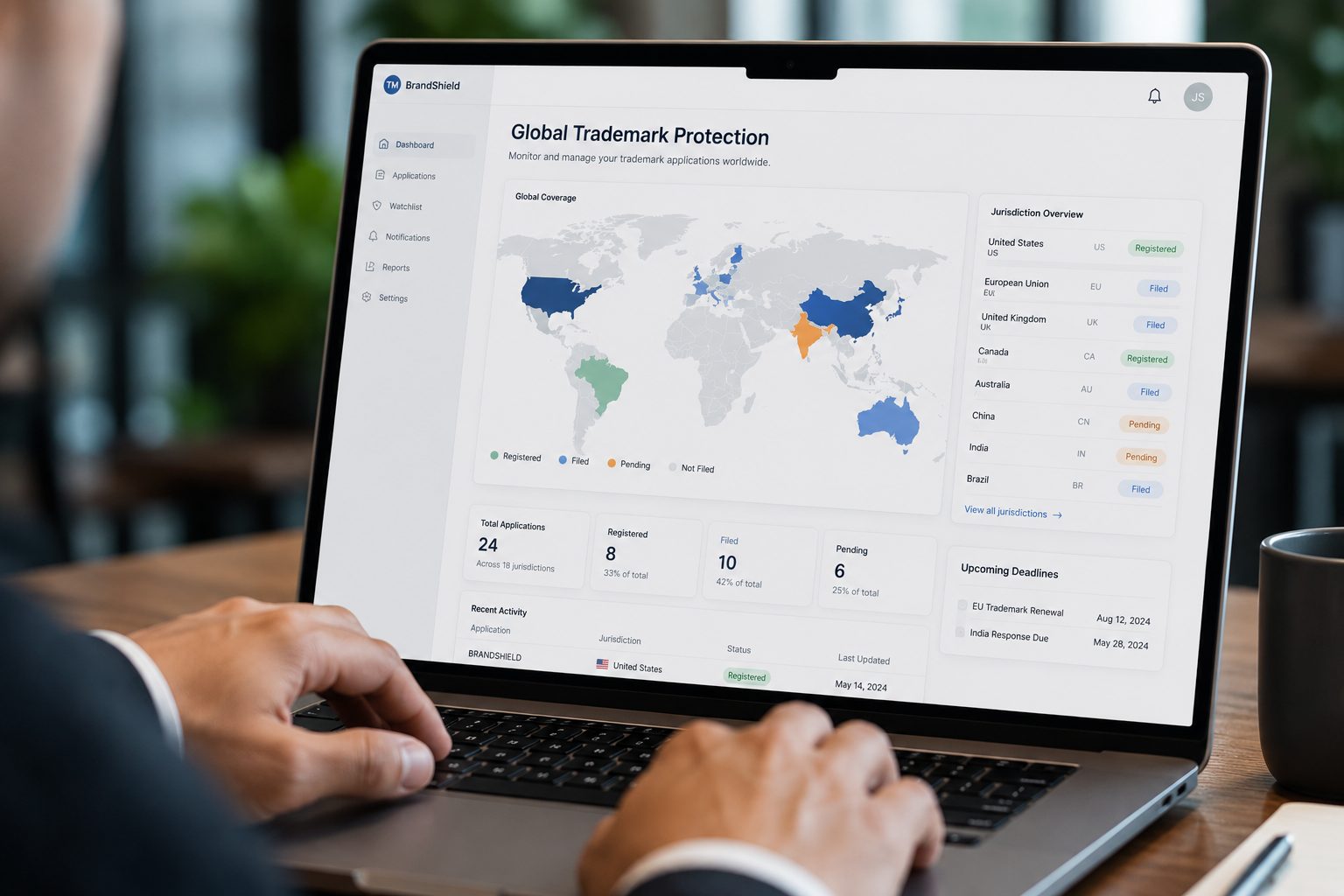
When to use the Madrid Protocol, when to file directly with EUIPO or UKIPO, and how to manage a multi-jurisdiction portfolio.

Enforcement
Defending a mark - 5 guides

Enforcement

Cease & desist letters, UDRP filings, marketplace takedowns, and TTAB oppositions.

Maintenance
Keep it alive - 4 guides

Maintenance & renewals

Section 8 affidavits, Section 9 renewals, docketing systems, and how to keep a registered mark from going abandoned or generic.

Free guides

Start with the fundamentals

All guides ->
Foundations

What is a trademark, really?

The 12-minute primer that demystifies the most-misunderstood corner of IP law - covering TM, (R), common-law rights, and why a logo isn't always what's protected.

02

The five types of trademarks

Word marks, design marks, trade dress, sound marks, and certification marks - when each one applies.
03

How to register a trademark in the U.S.

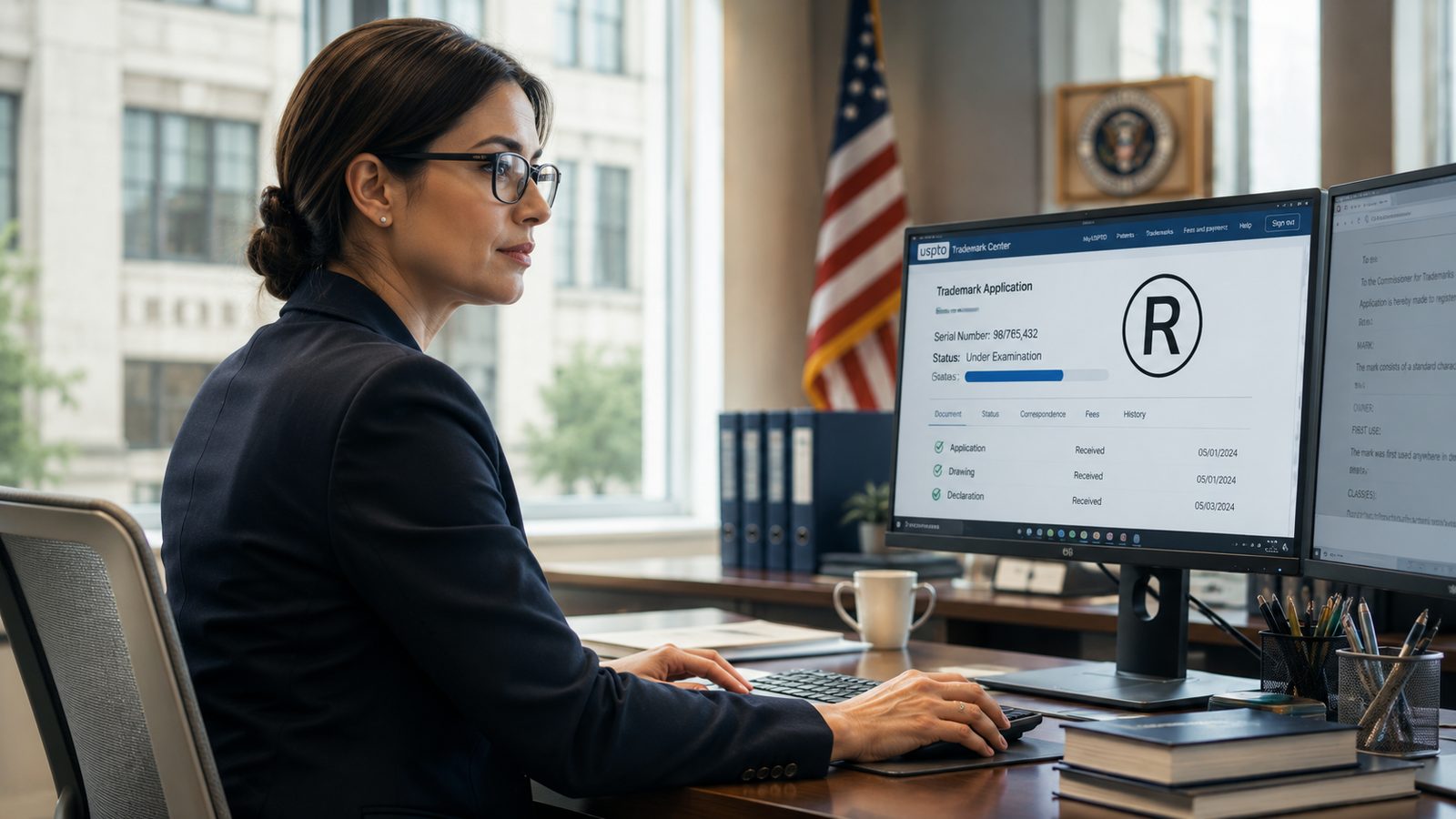
An end-to-end TEAS walk-through, with screenshots from the actual USPTO filing flow.
04

Where (and where not) to register

USPTO, EUIPO, UKIPO, Madrid Protocol - pick the right office for the right business.
05

Why bother registering at all?

Common-law rights vs. federal registration - the practical difference when something goes wrong.
A suggested reading order

From "what's a trademark?" to a registered, defended brand.

Step 01

Build the mental model

Start with the Foundations track: what trademarks are, what they protect, and how they differ from copyrights and patents.

Step 02

Run a clearance search

Learn how to search USPTO's TESS database and run common-law sweeps before you commit to a name or logo.

Step 03

Understand the filing process

Walk through what TEAS Plus actually asks for, how Office Actions work, and what a Statement of Use is.

Step 04

Maintain & defend

Learn the renewal cadence, how to spot infringement, and what realistic enforcement options look like.

Quick answers

Frequently asked about trademarks

All FAQs ->
What exactly is a trademark?
A trademark is any word, phrase, symbol, design, sound, or combination of these that identifies the source of goods or services and distinguishes them from those of other sellers. It's not really about the logo or the name itself - it's about the link in a customer's mind between that mark and a particular source.
What's the difference between TM and (R)?
Anyone using a mark in commerce can use TM (or SM for service marks) - it's a public claim, no registration required. (R) may only be used after a federal registration has been issued by the USPTO. Misusing (R) before registration is a federal violation and can be raised against you in a later dispute.
Do I have to register to have rights?
No. The moment you start using a mark in commerce, you have common-law rights within the geographic area where you actually do business. Federal registration extends those rights nationwide and adds powerful procedural advantages - but you have rights either way.
How long does a trademark last?
Forever, in principle - as long as you keep using it in commerce and file the required maintenance documents (Section 8 affidavit between years 5 - 6, then Section 8 + Section 9 renewals every 10 years). Stop using the mark, or fail to file maintenance, and the registration is cancelled.

See all FAQs ->

Home> Guides

The Guides Library

Plain-English explainers written by practicing IP attorneys. Free, browseable, and updated as the law changes.

Foundations

What is a trademark, really?

Symbols, words, scents - the surprisingly broad definition the law actually uses.

12 min read - Updated Apr 2026
Types

The 5 types of trademarks (with real examples)

Word marks, design marks, trade dress, sound, certification - when to use each.

9 min read - Updated Mar 2026
Foundations

TM vs. (R) - what each symbol actually means

You can use one tomorrow. The other could land you in court if you misuse it.

5 min read - Updated Feb 2026
Registration

How to register a trademark in the U.S.

The full TEAS Plus walk-through, with screenshots and a 30-day timeline.

22 min read - Updated Apr 2026
International

Where to register: USPTO, EUIPO, Madrid?

A decision tree for picking the right office for the right business.

14 min read - Updated Jan 2026
Foundations

Why register at all? Common-law rights explained.

What you get just by using a mark - and what you don't get without registering.

8 min read - Updated Mar 2026
Registration

How to run a clearance search like a pro

TESS, common-law sweeps, and the 4-step search report attorneys actually use.

18 min read - Updated Feb 2026
Enforcement

Your trademark is being copied. Now what?

The decision tree from "I just noticed" to cease & desist, takedown, or lawsuit.

11 min read - Updated Apr 2026
Home> Guides> Foundations
Foundations - 12 min read

What is a trademark, really?

A plain-English primer on the most-misunderstood corner of intellectual property law - covering TM vs. (R), common-law rights, and what trademark protection actually gives you.

A trademark isn't a logo. It isn't a name. It's a relationship - the link in a customer's mind between a source and the goods or services they buy. The law's job is to protect that link.

A working definition

Strip away the jargon and a trademark is anything that identifies the source of a product or service and distinguishes it from competitors. That "anything" is wider than most people think: words, logos, slogans, package shapes, sounds, even scents and colors can all qualify, provided they do that source-identifying work.

If a customer would recognize where a product came from based on the mark, the law has something to protect.

What trademarks aren't

Trademarks are routinely confused with two cousins in the IP family:

  • Copyright protects creative expression - a song, a novel, a piece of code. It doesn't care whether the work identifies a source.
  • Patents protect inventions - useful, novel, non-obvious processes or products. They expire; trademarks can last forever if used.

A logo can be both copyrighted (as artwork) and trademarked (as a source identifier). The two protections live side-by-side.

The four functions of a trademark

Courts and treatises typically describe trademarks as serving four overlapping functions:

  1. Source identification - telling consumers who made it.
  2. Quality signaling - implying a consistent standard.
  3. Advertising - carrying the goodwill the brand has built.
  4. Investment protection - preserving the value of that goodwill.

Quick check OK

Ask yourself: If I changed this element, would a customer think they were buying a different product? If yes, you're probably looking at something that can be trademarked.

TM, (R), and SM - what they actually mean

These three little symbols carry surprisingly different legal weight:

  • TM - anyone using a mark in commerce can use it, no registration needed. It's a public claim.
  • SM - the same idea, but for service marks (e.g., a consulting firm's name).
  • (R) - federally registered. Misusing this one is a federal offense. Only use it once your registration certificate has issued.

Common-law rights vs. federal registration

The instant you start selling under a brand, you have some rights - common-law rights - within the geographic area where you actually do business. Federal registration is what extends those rights nationwide and gives you the procedural advantages that win disputes: presumption of validity, statutory damages, customs enforcement, the use of (R), and the ability to file in federal court without proving up your rights from scratch.

Reviewed and updated regularly - Last updated April 2026 - General education, not legal advice

What to read next

You've got the mental model. To put it to work, jump into The five types of trademarks, then work through How to run a clearance search like a pro.

Home> FAQs

Frequently asked questions about trademarks

A plain-English answer to the questions we hear most often - about what trademarks are, how they work, and how to register and defend one. None of this is legal advice; it's general education.

The basics

What a trademark is (and isn't)

What exactly is a trademark?
A trademark is any word, phrase, symbol, design, sound, color, or combination of these that identifies the source of goods or services and distinguishes them from those of other sellers. It can be a name (Nike), a logo (the swoosh), a slogan ("Just Do It"), a sound (the NBC chimes), a color (Tiffany blue, in jewelry boxes), or even product packaging shape (the contour Coca-Cola bottle). The unifying idea is "source identification" - does this thing tell consumers where a product came from?
What's the difference between a trademark, copyright, and patent?
All three are types of intellectual property, but they protect different things. Trademarks protect brand identifiers (names, logos) and last as long as you keep using them. Copyrights protect creative expression (books, songs, code, artwork) and last for the life of the author plus 70 years. Patents protect inventions (useful, novel processes or products) and last 20 years from filing. A logo can be both copyrighted (as artwork) and trademarked (as a brand identifier) at the same time.
What's the difference between TM, (R), and SM?
TM is for trademarks on goods, SM is for service marks (services, not products), and either can be used by anyone making a public claim of rights - no registration required. (R) is reserved for marks that have completed federal registration with the USPTO. Misusing (R) before your registration certificate has issued is a federal violation and can be raised against you in disputes. When in doubt: use TM until your (R) arrives.
Do I have to register to have any rights?
No. In the United States, the moment you start using a mark in commerce, you have common-law rights - but only within the geographic area where you actually do business and have built brand recognition. Federal registration extends those rights nationwide and adds significant procedural advantages. Most other countries are "first-to-file" jurisdictions, meaning whoever registers first generally wins, regardless of who used the mark first.
What can be trademarked - and what can't?
Almost any source identifier can qualify, including unconventional ones (sounds, scents, colors, motion). What cannot be registered: marks that are merely descriptive of the goods ("Crispy" for cookies), generic terms ("Email" for email), purely functional features (a screw shape that's the only way it works), marks that are deceptive or scandalous, government insignia, or marks confusingly similar to existing registered marks. Personal names usually need to acquire "secondary meaning" before they can be registered.
Types of marks

The flavors of trademark

What are the main types of trademarks?
The five most common are: Word marks (the name itself, in any font - like "Google"); Design marks (a specific logo or stylization); Composite marks (a word + a design together); Trade dress (the look-and-feel of packaging, store layout, or product shape, like the Apple Store interior); and Non-traditional marks - sounds (NBC chimes), colors (UPS brown), scents (a particular perfume on yarn), or motion (the rotating Columbia Pictures torch).
What's the "strength" of a trademark?
Trademarks fall on a spectrum from weakest to strongest: generic (never protectable - "Apple" for apples), descriptive (weak, needs secondary meaning - "Cold and Creamy" for ice cream), suggestive (protectable, hints at the product - "Coppertone" for tanning lotion), arbitrary (strong, real word but unrelated to product - "Apple" for computers), and fanciful (strongest, made-up word - "Kodak," "Xerox"). Stronger marks are easier to register, easier to enforce, and worth more.
What's "trade dress"?
Trade dress protects the overall visual appearance of a product or its packaging when that appearance identifies a source. Classic examples: the contour Coca-Cola bottle, the red Louboutin sole on women's shoes, the layout of an Apple Store. Trade dress can be registered, but you generally must show that it's non-functional (not necessary to how the product works) and that consumers actually associate the look with your brand.
What's a service mark, and is it different from a trademark?
Legally they're treated almost identically. The only practical difference is what they identify: a trademark identifies goods (physical products), while a service mark identifies services. McDonald's is a trademark when applied to hamburgers and a service mark when applied to restaurant services. Many people use "trademark" as the umbrella term for both, which is fine in conversation.
Registration

How and where to register

How do I register a trademark in the U.S.?
U.S. registration is handled by the USPTO through an online system called TEAS (Trademark Electronic Application System). The process: (1) run a clearance search to make sure your mark is available; (2) identify the goods/services classes you'll register in; (3) file a TEAS Plus or TEAS Standard application online; (4) wait for an examining attorney to review (3 - 6 months); (5) respond to any Office Actions; (6) once approved, the mark publishes for opposition for 30 days; (7) if no one opposes, registration issues. Total timeline: roughly 8 - 14 months in a smooth case.
How much does it cost to register?
USPTO filing fees are charged per "international class" your mark covers. As of 2026, TEAS Plus filings start at $250 per class; TEAS Standard is $350 per class. Most small-business filings are 1 - 3 classes. If you hire an attorney, expect to add roughly $500 - $2,000+ for clearance and filing. International registrations through the Madrid Protocol have separate fees per designated country, typically $100 - $500 per country.
Where should I register - USPTO, EUIPO, Madrid Protocol?
Register where you actually do business or plan to do business in the next 3 - 5 years. Selling primarily in the U.S.? File with the USPTO. Selling across the EU? File a single EUIPO application that covers all 27 member states. Selling globally? The Madrid Protocol lets you file one international application that designates 100+ member countries. Madrid is efficient when you need 4+ countries, but it depends on a "basic" home application, so plan carefully.
What's a "class" and how do I pick mine?
The Nice Classification system divides all goods and services into 45 international classes (1 - 34 are goods, 35 - 45 are services). Class 25 is clothing; Class 41 is education and entertainment services; Class 9 covers software and electronics. You file in every class your products or services actually fall into. Picking too narrow leaves you exposed; picking too broad means paying for protection you don't need (and risks abandonment for non-use).
What's an "Office Action" and why did I get one?
An Office Action is a letter from the USPTO examining attorney raising issues with your application. The most common reasons: likelihood of confusion with an existing mark (Section 2(d)); descriptiveness (Section 2(e)(1)); problems with your specimen (the proof you're using the mark); or unclear identification of goods/services. You typically have 3 months to respond. Many Office Actions are routine and fixable; some are fatal to the application.
What's the difference between "use-in-commerce" and "intent-to-use"?
A use-in-commerce (1(a)) filing means you're already using the mark in real commercial sales - you'll submit a specimen showing it. An intent-to-use (1(b)) filing means you have a good-faith plan to use the mark but haven't started yet - useful for reserving a name before launch. ITU applications cost a bit more because you'll later file a Statement of Use (with extensions available up to 36 months). The filing date is locked in either way.
How long does a registered trademark last?
Forever, in principle - but only if you keep using it and file the required maintenance documents. In the U.S.: a Section 8 Declaration of Use between years 5 and 6, then a combined Section 8 + Section 9 renewal every 10 years thereafter. Miss a deadline and your registration is cancelled. Stop using the mark with no intent to resume, and it's considered abandoned (typically after 3 years of non-use).
Why register

Why bother registering at all?

What does federal registration actually get me?
Several powerful advantages over common-law rights: nationwide protection from your filing date, regardless of where you actually sell; the right to use (R); a legal presumption of validity and ownership in court; the ability to file in federal court; access to statutory damages in counterfeiting cases; the ability to record with U.S. Customs to block infringing imports; and "incontestable" status after 5 years, which makes most challenges impossible. None of these come from common-law rights alone.
Is a trademark really necessary for a small business?
It depends on what you're protecting and what you're risking. If your business identity is a generic descriptor and you'd happily change names, registration is probably overkill. But if your name, logo, or product line is genuinely distinctive - and especially if you're investing in marketing or building a customer base around it - registration is one of the cheapest forms of insurance you can buy. The day you discover someone else is using a similar name is the day you'll wish you had filed.
What happens if I don't register and someone copies me?
You still have common-law rights, but enforcement is harder, slower, and more expensive. You'd need to prove (rather than presume) your prior use, your reputation, and your geographic scope - typically through customer surveys, sales records, and advertising spend. And your rights only extend to the area where you've actually done business. A registered competitor in another state could legally use the same mark there, and even potentially block you from expanding.
Enforcement & disputes

When things go wrong

Someone is using my trademark. What do I do?
First, document everything: screenshots, product samples, dates. Second, assess whether there's actual likelihood of confusion - courts look at similarity of marks, similarity of goods/services, channels of trade, sophistication of buyers, and intent. Third, escalate proportionally: a polite outreach email, then a formal cease & desist letter, then platform takedowns (Amazon, Etsy, Shopify all have IP processes), then formal action - TTAB opposition or cancellation, federal lawsuit, or UDRP for domain names. Most disputes resolve before litigation.
What's a "cease and desist" letter and do I need a lawyer to send one?
A cease and desist (C&D) is a formal written demand that someone stop using your mark. You don't strictly need a lawyer to send one, but a poorly drafted C&D can backfire - making your rights look weak, opening you to a "declaratory judgment" lawsuit by the recipient, or going viral as an example of trademark bullying. At minimum, identify your rights specifically, describe the alleged infringement, state what you want them to do, and give a reasonable deadline.
What's the TTAB?
The Trademark Trial and Appeal Board is an administrative court within the USPTO. It hears two main types of cases: oppositions (challenges to a published application before it registers) and cancellations (challenges to an existing registration). The TTAB can refuse or cancel a registration but cannot award money damages or injunctions - for those, you go to federal court. TTAB cases are run mostly on paper and tend to be cheaper than federal litigation, but still typically run $50K - $300K+.
What about domain-name disputes?
If someone has registered a domain name that infringes your trademark (cybersquatting), you have two main options: file a UDRP (Uniform Domain-Name Dispute-Resolution Policy) action through ICANN-approved providers like WIPO - typically $1,500 - $4,000 in fees, decided in 60 days, with the only remedy being domain transfer or cancellation; or file an ACPA (Anticybersquatting Consumer Protection Act) claim in U.S. federal court, which is more expensive but allows damages.
Can a trademark go "generic" and lose protection?
Yes - and it's a real risk. When the public starts using your trademark as the generic name for the product itself rather than as a brand, courts can declare the mark generic and cancel its protection. Famous casualties: aspirin, escalator, thermos, cellophane, dry ice. Brands fight this with style guides ("Always use KLEENEX as an adjective: KLEENEX tissues"), aggressive enforcement, and public reminders. Google, Xerox, and Velcro have all run major campaigns to keep their marks alive.
Practical questions

Common what-ifs

Can I trademark my own name?
Sometimes. Personal names are generally treated as descriptive and need to acquire secondary meaning - proof that consumers recognize the name as a brand, not just a person - before they can be registered. Famous examples that cleared this bar: Calvin Klein, Ralph Lauren, McDonald's. If your name is uncommon and used as a brand for long enough with significant marketing, registration becomes possible.
Can I trademark a phrase or slogan?
Yes - slogans are routinely registered, provided they're distinctive and used as a source identifier rather than just a decorative or descriptive phrase. "Just Do It," "I'm Lovin' It," "Got Milk?" are all registered. The harder question is whether a slogan really functions as a trademark or is just ornamental ad copy - examiners scrutinize this carefully, and you'll need a specimen showing the slogan used as a brand identifier (not just plastered on a t-shirt as decoration).
Do I need to register internationally if I sell online?
Selling online doesn't automatically give you international trademark rights. Each country (or region, like the EU) has its own trademark system. If you're shipping to or marketing in another country in any meaningful way, you should consider registering there - especially in first-to-file jurisdictions like China, where someone else can register your mark before you and legally block you from selling.
What's a "specimen" and what counts as a good one?
A specimen is your proof to the USPTO that you're actually using the mark in commerce. For goods, that's typically a photo of the product showing the mark on the product itself, on packaging, or on a hangtag - not a mockup, advertising, or invoice. For services, it's typically a website screenshot, brochure, or signage showing the mark associated with the service offering. Bad specimens are the #1 reason for Office Actions.
What if my trademark application is refused?
A refusal isn't necessarily the end. Many refusals are overcome by responding to the Office Action - sometimes with a short argument, sometimes by amending the goods/services description, occasionally by submitting evidence of acquired distinctiveness. If the examining attorney issues a final refusal, you can appeal to the TTAB. Other times the realistic answer is to refile with a different mark - clearance done right at the start prevents most of this.
Do I need a lawyer to file?
In the U.S., domestic applicants are not required to use a lawyer. Foreign-domiciled applicants are required to use a U.S.-licensed attorney as of 2019. Either way, the more complex your situation - multiple classes, design marks, descriptive issues, or anything that has to navigate Office Actions - the more value an attorney adds. For a clean wordmark in a single class, motivated founders can and do file successfully on their own.
What if I just want to "trademark a logo" - is that a thing?
It is, but you should think carefully. You can register the logo alone (a "design mark"), the name alone (a "word mark"), or both as a "composite mark" (logo + name combined). For most businesses, the strongest protection is filing the wordmark and the design mark separately - that way you can rebrand the logo without re-registering the name, and vice versa. Composite marks tie them together and can be limiting.
Still have questions?

Browse the full guide library

FAQs are a starting point. The guides go deeper, with examples and walk-throughs.

Read the guides ->
Home> Resources

Resources & templates

Free downloads, glossaries, and reference materials - everything you need to put the guides into practice. All free, no sign-up required.

PDF

Trademark Starter Kit

22-page primer with a clearance checklist, USPTO class cheat sheet, and starter cease & desist letter.
Free download
DOC

Cease & desist template

An annotated starting-point letter, with margin notes explaining every paragraph and what to customize.
Free download
XLS

Clearance search report

Spreadsheet template for documenting TESS hits, common-law sweeps, and risk scoring.
Free download
PDF

USPTO classification cheat sheet

All 45 international classes with examples, common pitfalls, and ID Manual quick-links.
Free download
PDF

Madrid Protocol decision tree

A 1-page flowchart for picking between national filings and a Madrid international application.
Free download
DOC

Office Action response templates

Six annotated templates for the most common refusals: 2(d), 2(e)(1), specimen, identification.
Free download
A - Z

Trademark glossary

200+ terms in plain English, from "abandonment" to "zone of natural expansion."
Free reference
Q and A

FAQ library

The most-asked questions on filing, maintenance, and enforcement - answered in plain English.
On this site
Calendar

Renewal calendar template

A printable calendar template marking Section 8, Section 9, and renewal deadline windows for any registration date.
Free download
Looking for answers?

Browse the FAQ library

Plain-English answers to the questions we hear most often.

Go to FAQs ->
Home> About

An open library on the law of brands.

Our mission

Make trademark law learnable in an afternoon, not a semester.

Trademark law is mostly common sense buried under a century of jargon. Trademark Academy is a free, open-access library of guides, FAQs, and templates that try to peel that jargon away - explaining what trademarks are, what they protect, how to register, and how to defend a brand in plain English.

Everything on the site is free to read and free to share. There are no accounts, no paywalls, no upsells, and no advertising - just the explainers we wish had existed when we were first learning this stuff.

How we work

What you can expect from this site

1.

Plain English

No jargon walls. Every term that needs defining is defined inline, on the page where you first meet it.

2.

Practical, not academic

The guides focus on what you actually have to do, decide, or file - not edge-case case law you'll never use.

3.

Always free

No accounts, no paywalls, no advertising. Read on the site, save the PDFs, share with anyone.

4.

Not legal advice

This is general education, not advice for your specific situation. For that, find a licensed trademark attorney.

Get in touch

Questions, corrections, or suggestions?

Spotted an error? Want a topic covered? We read every message.

Corrections and suggestions
editors@trademarkacademy.com
Home> Contact

Talk to our team

Questions about courses, CLE, team plans, or partnerships? Drop us a note.